June 2, 2026


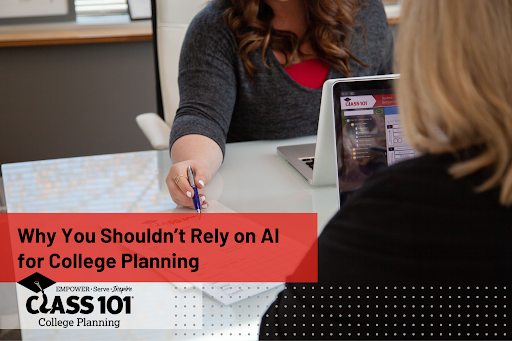
Artificial intelligence has quickly become a go-to tool for students navigating complex tasks, including the college application process. From drafting essays to suggesting schools, AI can seem like a convenient shortcut. But when it comes to planning something as personal and high-stakes as your college journey, relying too heavily on AI can actually do more harm than good.
1. Your Story Isn’t Generic, but AI Often Is
College applications are deeply personal. Admissions officers are looking for authenticity, individuality, and self-awareness. AI, by design, generates responses based on patterns and averages. That means it tends to produce ideas and strategies that are broadly applicable but not uniquely you. If you let AI guide your entire process, you risk blending into a sea of applicants who followed similarly generic advice.
2. AI Can’t Truly Know Your Goals or Values
Artificial Intelligence programs like Chat GPT can ask you questions and process your answers, but it doesn’t understand you. It doesn’t grasp your motivations, your family context, your cultural background, or the subtle factors shaping your decisions. Choosing where to apply isn’t just about rankings or acceptance rates, it’s also about fit. That requires introspection, conversations with mentors, and real-world exploration, not just algorithmic suggestions.
3. Over-Reliance on AI Can Weaken Critical Thinking
Planning your college applications involves research, prioritization, and decision-making skills that are essential not just for college, but for life. If you outsource those steps to AI, you miss an opportunity to develop them. Worse, you may accept recommendations without questioning them, which can lead to poor choices or missed opportunities.
4. AI Can Be Outdated or Inaccurate
Even advanced AI tools don’t always have the most current information. Admissions policies, deadlines, financial aid programs, and institutional priorities can change frequently. If you rely solely on AI, you might act on outdated or incomplete data. Official college websites, guidance counselors, and admissions offices remain far more reliable sources for critical details.
5. Your Written Work Should Be Your Own
Many colleges are increasingly wary of AI-generated content, especially in application essays. If your application feels overly polished or impersonal, it may raise red flags. More importantly, using AI to shape your narrative too heavily can distance you from your own voice. Admissions officers aren’t looking for perfection: They’re looking for authenticity, individuality, and sincerity.
6. AI Can Oversimplify a Complex Process
The college application journey isn’t just a checklist: It’s a process of self-discovery. AI often breaks it down into neat steps and optimized strategies, which can be helpful, but also misleading. Not everything can or should be optimized. Sometimes the best decisions come from uncertainty, reflection, and even mistakes: things AI is not equipped to replicate.
7. You Miss Out on Human Guidance
Teachers, counselors, family members, Class 101 Advisors, and mentors bring something AI cannot: lived experience, emotional intelligence, and familiarity with you and your goals. They can challenge your assumptions, encourage you when you’re stuck, and help you see possibilities you hadn’t considered. Relying too much on AI can isolate you from these valuable perspectives.
8. The Process Matters as Much as the Outcome
Applying to college isn’t just about getting in: It’s about learning who you are and what you want. If AI handles the planning, you may reach the end with a list of applications submitted, but without a clear sense of direction. That can make the transition to college and beyond much harder.
A Better Approach
AI can be a useful tool for brainstorming, organizing information, or checking your work. But it should be a tool, not a decision-maker. If you decide to use AI, be sure to use it to support your process, not replace it.
At Class 101, we encourage you to add the voice of human experience and longstanding expertise to your planning process by working with one of our trusted advisors. Your Class 101 Advisor will be here for you from the moment you create your college “wish list” until the moment you receive your orientation paperwork – and beyond, if you choose.
The Bottom Line: Your college application is one of the first major decisions you’ll make about your future. That’s why the application process deserves your time, your thought, and your voice. AI can assist, but it shouldn’t lead.
We Help Families Navigate College Planning
Schedule a free consultation with an experienced Class 101 Bloomington advisor today.
Randy Stegemoller
Class 101 Owner + College Advisor
October 22, 2026
If we look at the past two decades of technology in education, we see a steep incline in the resources and tools available to students. A mark of success today is being able to take those tools and use them to your advantage while still keeping a sense of creativity and individuality. The use of […]
Read More >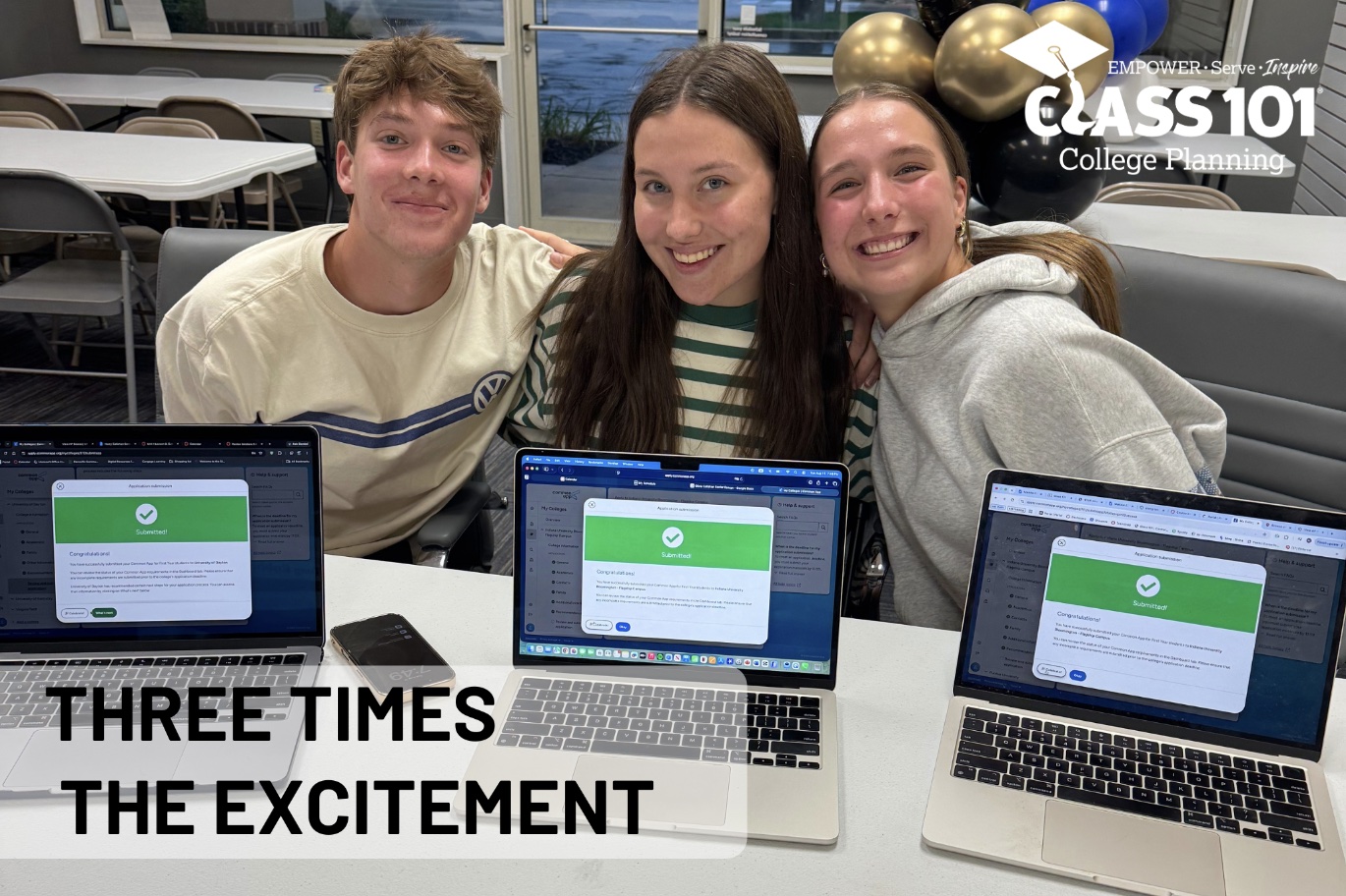
October 2, 2026
Most parents brace themselves for one Senior year of college applications. Class 101 parent, Ashley, had three all under one roof. If the thought of one student navigating essays, deadlines, and decisions feels like a lot, triple it. That’s exactly what Ashley and her triplets, Olivia, Maddie, and Harry, took on this year, with a […]
Read More >
September 18, 2026
For years, students have treated their GPA as the headline number on their college applications. The higher the number, the better their chances, right? Not necessarily. A GPA remains an important part of the admissions process, but it’s not a universal measurement. A 4.0 at one high school may represent something very different than a […]
Read More >