August 12, 2026



When most families think about college planning, they picture Senior year: campus visits, SAT prep, application essays, and late nights filling out financial aid forms. However, by the time Senior year arrives, many of the biggest college-planning decisions have already been made.
College admissions have become increasingly competitive, and students who begin college planning early simply have more opportunities, more flexibility, and often, better outcomes.
At Class 101, we’ve seen it firsthand: Starting early doesn’t mean putting unnecessary pressure on students. Rather, it means giving them room to discover who they are, make informed decisions, and build a college plan that fits their goals.
One of the biggest misconceptions about college planning is that it’s all about filling out applications. In reality, the application is just the final chapter of a much longer story.
College admissions officers evaluate years of academic performance, extracurricular involvement, leadership, personal growth, and course selection. They want to understand, not just what a student accomplished, but why those experiences matter. And that story isn’t created during Senior year: It’s built over time.
That’s why students who begin planning in middle school or early high school have the opportunity to intentionally shape their experiences rather than scrambling to fill perceived gaps later.
Every year, students discover they wish they had taken a different math class, enrolled in more rigorous coursework, or started earning college credit sooner. But unfortunately, some of those opportunities can’t be recreated.
Planning ahead allows students to choose high school courses that align with future college and career goals, take advantage of Advanced Placement (AP), dual-credit, or honors programs, and meet scholarship and university admissions requirements before it’s too late. In other words, students can make thoughtful academic decisions based on foresight, not hasty decisions based on hindsight.
Standardized testing isn’t disappearing, in fact we’re seeing it make a comeback. While many colleges remain test-optional, strong SAT or ACT scores can still strengthen college applications, qualify students for merit scholarships, and open doors to additional opportunities. Students who begin preparing early can improve gradually instead of trying to master everything in a few weeks.
At Class 101, our students increase their SAT scores by an average of 170 points and ACT scores by an average of 3.1 points from their baseline assessments through comprehensive SAT and ACT test preparation. Those improvements happen through consistent preparation alongside a Class 101 Advisor and a personalized strategy geared toward each individual student.
Though many students apply for scholarships during their Senior year, the strength of those scholarship applications often depends on years of preparation and execution.
Academic performance, leadership, community service, extracurricular involvement, and demonstrated interests over time all contribute to scholarship opportunities.
Students who plan ahead position themselves to compete for more merit-based aid while reducing the overall cost of college. That’s one reason why college planning isn’t just about getting accepted: It’s also about making college more affordable.
One of the biggest benefits of starting early has to do with confidence. Students who understand the college planning process tend to feel less overwhelmed because they know what’s coming next. They aren’t making every major decision at once. Instead, they’re accomplishing manageable goals each year.
That confidence often translates into stronger essays, better interviews, more thoughtful college lists, and healthier decision-making throughout high school.
Parents often tell us they wish they had started guiding their child through the planning process sooner.
Waiting until Junior or Senior year means juggling college visits, applications, financial aid, testing, essays, recommendation letters, and scholarship deadlines all at the same time, while starting early spreads some of those responsibilities over several years. Instead of racing against the calendar, families can make thoughtful decisions together while enjoying the high school experience. (And let’s be honest: It’s all over too fast as it is!)
If you’ve made it this far, you probably know the answer: earlier than you think.
At Class 101, we recommend students begin the college planning process no later than freshman year of high school, with conversations beginning as early as eighth grade.
That doesn’t mean asking a middle school student to choose a college or commit to a career. Instead, it’s about building a strong foundation. Middle school is an excellent time to develop effective study habits, explore interests, and begin understanding how academic choices and extracurricular involvement can open doors later, during the college planning process.
Once students enter high school, college planning becomes more intentional. Freshman year is the ideal time to create a personalized roadmap with your Class 101 Advisor that can evolve as your student grows. Interests change, goals shift, and new opportunities emerge, and that’s exactly why starting early matters. Students have time to adjust their path without feeling like they’re racing against college admissions deadlines.
And remember: The goal of any college planning process isn’t to pressure students into having all the answers. Rather, it’s to give them the time and guidance to discover them. Because when it comes to college planning, the greatest advantage isn’t knowing exactly where you’re going: It’s having enough time to get there with confidence.
Ready to get a headstart on college planning? Schedule a free consultation with a Class 101 representative today!
October 2, 2026
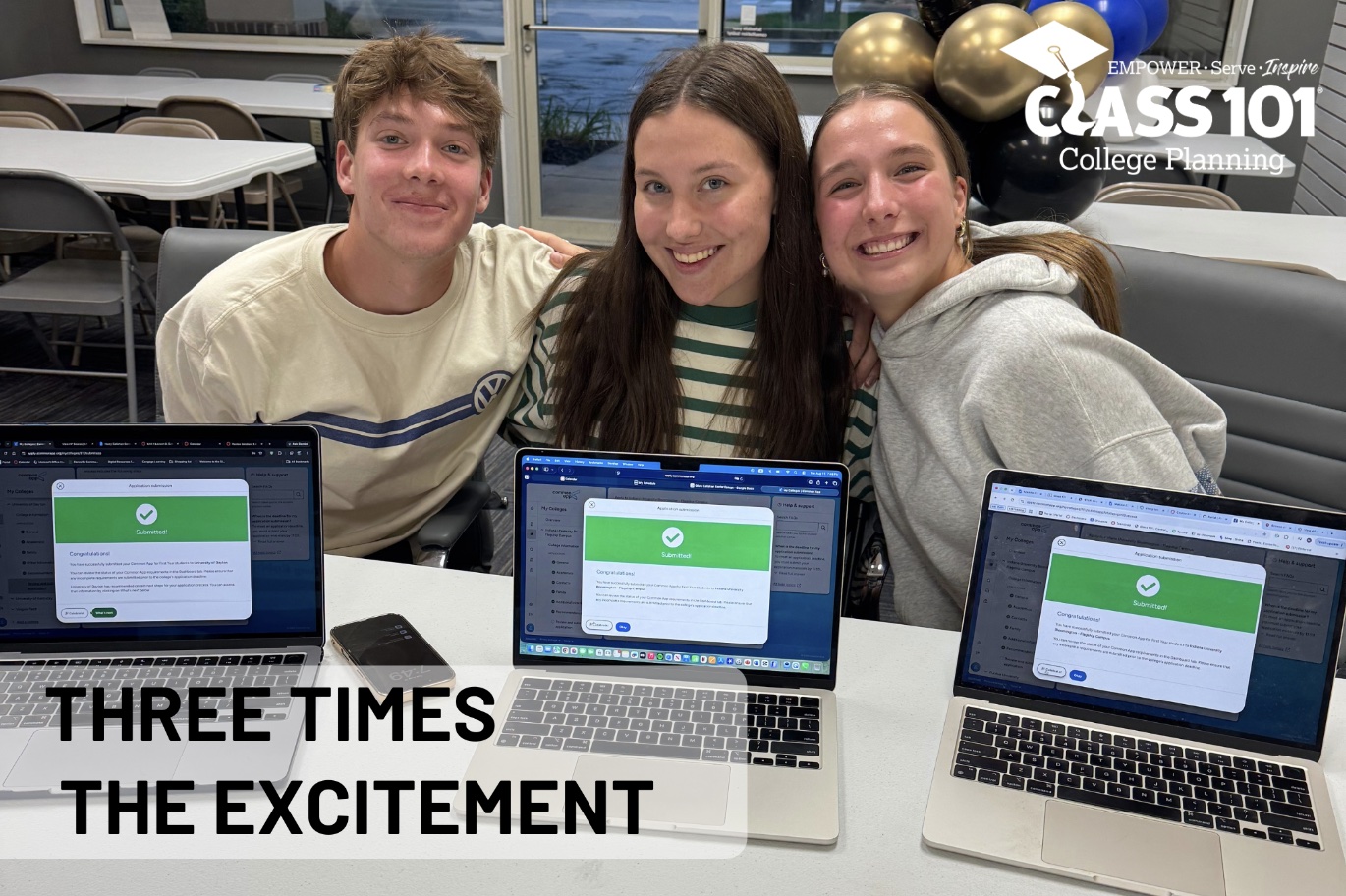
Most parents brace themselves for one Senior year of college applications. Class 101 parent, Ashley, had three all under one roof. If the thought of one student navigating essays, deadlines, and decisions feels like a lot, triple it. That’s exactly what Ashley and her triplets, Olivia, Maddie, and Harry, took on this year, with a […]
Read More >
September 18, 2026
For years, students have treated their GPA as the headline number on their college applications. The higher the number, the better their chances, right? Not necessarily. A GPA remains an important part of the admissions process, but it’s not a universal measurement. A 4.0 at one high school may represent something very different than a […]
Read More >
August 31, 2026
When we talk about college planning, most of the conversation focuses on students. What classes should they take? When should they take the SAT or ACT? Which colleges should they visit? What should they write about in their application essay? What do they want to study? Those are important questions, but there’s another person in […]
Read More >