March 12, 2018


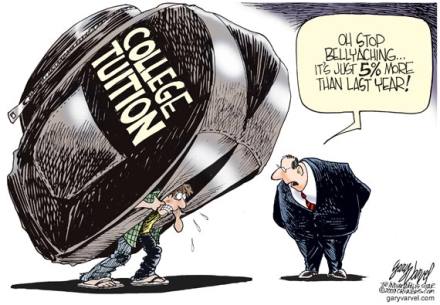
The cost of College has risen more than 5x the rate of inflation in the United States. In August of 2014, the US Inflation Rate was 1.99%. The inflation of the Cost of College from 2008 – 2013 was 10.5% according to the US Department of Education. You may be asking, “How is it that during the Great Recession that started in 2008 there have been significant drops in the Stock Market and Real Estate, but not with Higher Ed?” We know that over time, technology costs drop due to competition. Don’t expect that same drop from higher education! No, college costs are only on the rise! And they are not stopping!
I regularly take students to university campuses for tours. During our visits, we like to go to some of the prominent departments of the university and speak to the faculty. Talking to faculty helps the students get excited about all of the opportunities in academe. Recently though, the tours have been focusing more on Rock Walls to climb, Yoga classes at the New Recreational Center, on-campus Coffee shops, Brazilian Churrascarias (steak houses), Pools with Lazy Rivers, etc. Millions of your dollars are being spent on, what I like to call, the Country-Clubification of campuses, all in the interest of competition to attract your student.
Tenure is a common practice in colleges that is intended to promote quality education and academic freedom by assuring that a professor cannot be fired without just cause. While tenure assures the academic freedom within the classroom, it has created a laissez fair work ethic. In large state Universities, your freshman students may never see a professor. Instead your student will be instructed by an upperclassman that may or may not speak English. It is common to have a Graduate Assistant as the face of large freshman classes. Where are the professors? Like Waldo, no one seems to know where they are? As tenure continues to protect unengaged professors, the costs will continue to rise.
The primary reason for the real estate crash in 2008 was that people were able to obtain financing for homes, even if they didn’t have the ability to pay them back. In order to help Americans own a home (part of the American Dream), the US government subsidized real estate mortgages such that all income levels could purchase a home, even if they couldn’t afford it. What? Are any of us surprised that didn’t work!
Guess who’s at is again! Now the US government is subsidizing millions of student loans without proof that the students will ever be able to pay it back. To comfort the tax payers, Federal Student Loans are not forgivable in bankruptcy, for now. In 2014, the dollars collected from Federal Student Loans are greater than any corporation in the US, including Exxon Mobile, Apple, Ford Motor Company, etc. The Student Loan bubble is more than $1 Trillion. Tax payers beware! We have another bail-out coming…
I’d love to hear you thoughts on the rising cost of college. Leave you comment below.

October 22, 2026
If we look at the past two decades of technology in education, we see a steep incline in the resources and tools available to students. A mark of success today is being able to take those tools and use them to your advantage while still keeping a sense of creativity and individuality. The use of […]
Read More >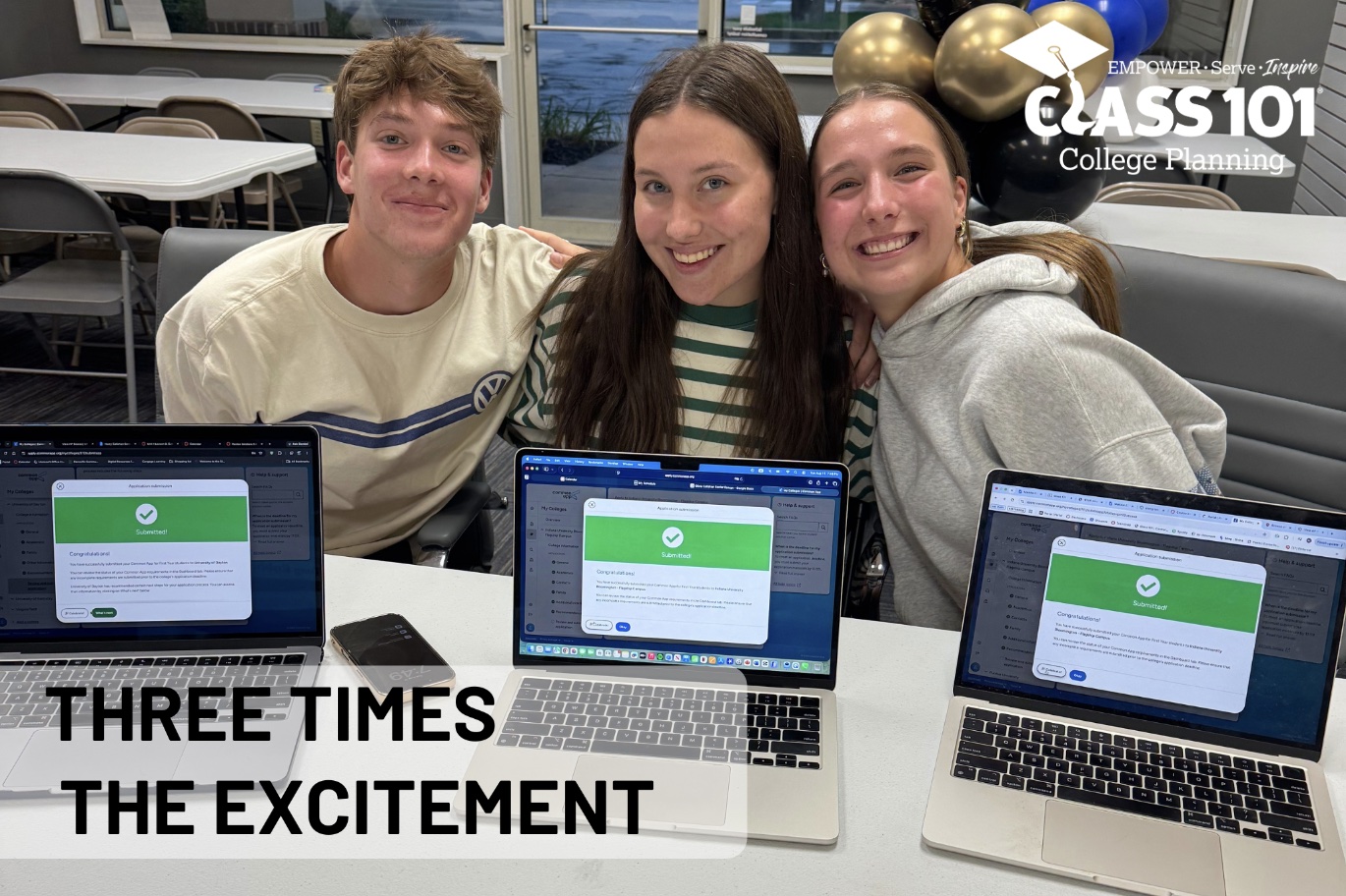
October 2, 2026
Most parents brace themselves for one Senior year of college applications. Class 101 parent, Ashley, had three all under one roof. If the thought of one student navigating essays, deadlines, and decisions feels like a lot, triple it. That’s exactly what Ashley and her triplets, Olivia, Maddie, and Harry, took on this year, with a […]
Read More >
September 18, 2026
For years, students have treated their GPA as the headline number on their college applications. The higher the number, the better their chances, right? Not necessarily. A GPA remains an important part of the admissions process, but it’s not a universal measurement. A 4.0 at one high school may represent something very different than a […]
Read More >